Zimbabwe Dangerous Game Hunting: Species, Costs & What to Expect
What is Dangerous Game?
In African hunting terminology, "dangerous game" refers to species that pose a genuine, life-threatening risk to the hunter during the approach and at the moment of the shot. The traditional Big 5 were originally defined not by size or beauty but by the danger they present when hunted on foot: elephant, lion, leopard, Cape buffalo, and rhinoceros.
In Zimbabwe, where rhinoceros hunting has not been permitted for decades, the practical dangerous game list comprises six species, each presenting unique challenges and risks.
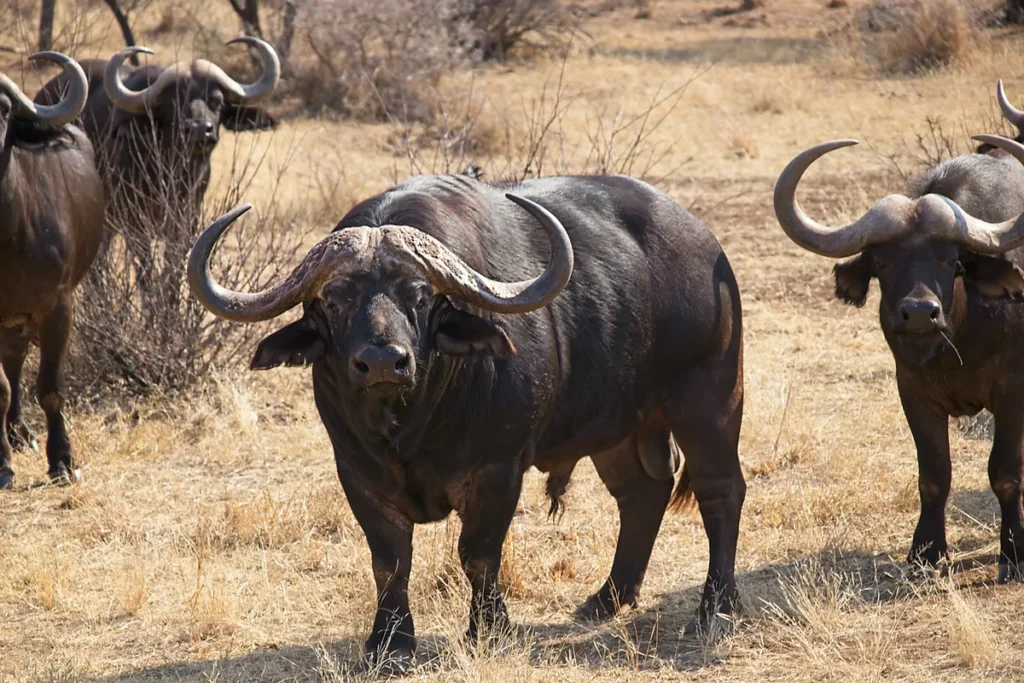
- Cape Buffalo are the most popular and widely available dangerous game species in Zimbabwe. A wounded buffalo is regarded by many professional hunters as the single most dangerous animal in Africa. The old dugga boys, solitary bulls expelled from the breeding herd, are tough, cunning, and remarkably aggressive when cornered in thick bush.
- African Elephant are available on a limited annual quota. Elephant hunting is the ultimate test of bushcraft, nerve, and marksmanship. Approaching within 15 to 30 yards of a six-tonne bull in dense jesse bush, then executing a precise brain shot, requires years of experience.
- Leopard are the most elusive and arguably the most dangerous of the cats when wounded. Traditional baiting techniques require patience and discipline over 14 to 21 days. The final shot typically comes at last light as the cat feeds on a bait hung in a tree.
- African Lion represent the pinnacle of African hunting. Available on an extremely limited quota in a handful of Zimbabwe concessions, lion hunting combines rarity, danger, expense, and an unmatched emotional intensity.
- Hippopotamus kill more people in Africa each year than any other large mammal. They are deceptively fast on land and ferociously territorial in water. Hippo hunting in Zimbabwe typically involves stalking animals on land during early morning or late afternoon feeding.
- Nile Crocodile are Africa's apex aquatic predator. Trophy crocodiles of 12 to 16 feet lurk along the Zambezi and its tributaries. Crocodile hunting usually involves precise brain shots at distance from a concealed position on the riverbank.
Dangerous game hunting demands a different set of skills and mental preparation than plains game hunting. Shot placement must be precise because bullet placement errors are punished swiftly and violently. Your choice of Professional Hunter is critical because your PH is not just a guide but your safety backup when things go wrong in the thick stuff. Physical fitness, calm nerves under pressure, and genuine proficiency with heavy-calibre rifles are non-negotiable prerequisites.
Dangerous Game Costs Compared
Understanding the cost structure of dangerous game hunting helps you plan a realistic budget and avoid unpleasant surprises. The table below provides a side-by-side comparison of what each dangerous game species costs in Zimbabwe.
| Species | Trophy Fee | Min Days | Total Estimate (All-In) |
|---|---|---|---|
| Cape Buffalo | $10,000 to $14,000 | 7 | $18,000 to $30,000 |
| Elephant | $20,000 to $50,000 | 10 | $50,000 to $100,000 |
| Leopard | $5,000 to $8,000 | 14 | $30,000 to $50,000 |
| Lion | $30,000 to $55,000 | 14 | $70,000 to $150,000 |
| Hippo | $6,000 to $10,000 | 7 | $15,000 to $25,000 |
| Crocodile | $5,000 to $8,000 | 7 | $12,000 to $22,000 |
The "Total Estimate" column includes daily rates, trophy fees, gratuities, dip and pack, and a rough allowance for travel and insurance. It does not include trophy shipping, which can add $2,000 to $15,000 depending on volume and destination.
Cape Buffalo represents the most accessible and cost-effective entry point into dangerous game hunting. For hunters on a moderate budget, the combination of buffalo, hippo, and crocodile along the Zambezi River provides three dangerous game trophies in a single 10 to 14 day safari at a total cost of $35,000 to $55,000.
At the other end of the spectrum, a full Big 5 safari (elephant, lion, buffalo, and leopard) spanning 28 or more days will typically run $180,000 to $260,000 all-in. This is the ultimate African hunting experience and represents a lifetime investment for most hunters.
Rifle and Calibre Requirements for Dangerous Game
Zimbabwe law mandates a minimum calibre of .375 H&H Magnum for all dangerous game species. This is not a suggestion; it is a legal requirement, and hunting with an undersized calibre will result in the immediate cancellation of your hunt.
That said, the .375 H&H is generally considered the bare minimum for buffalo and is often inadequate for elephant. Here are the recommended calibres based on real-world experience in Zimbabwe's thick bush.
Cape Buffalo
The .375 H&H works, but most experienced buffalo hunters prefer something heavier. The .416 Rigby, .416 Remington Magnum, and .458 Lott are excellent choices that deliver significantly more knockdown power at typical buffalo engagement distances of 30 to 80 yards. The .470 Nitro Express in a double rifle is a classic buffalo calibre favoured by many PHs. Use premium bonded soft-point bullets like Swift A-Frame, Woodleigh Weldcore, or Barnes TSX. Shot placement is behind the shoulder, breaking both shoulders if possible.
African Elephant
For the brain shot, you need a rifle that delivers a heavy, non-expanding solid bullet with deep penetration. The .416 Rigby with 400-grain solids is the minimum recommended calibre. The .458 Lott, .470 Nitro Express, and .500 Nitro Express are preferred by most elephant hunters. Bullet selection is critical: use monolithic solids or FMJ solids designed for maximum straight-line penetration through thick skull bone.
Leopard
Leopard is the exception to the heavy-calibre rule. Most leopard are taken at last light from a blind at 60 to 80 yards. A .300 Winchester Magnum or .338 Winchester Magnum with premium soft-point ammunition is ideal. The key is a fast, violent expansion that anchors the cat on the spot. A wounded leopard in thick bush at dusk is one of the most dangerous situations in African hunting.
Lion
The .375 H&H and .416 Rigby are both excellent lion calibres. Lion shots are typically taken at moderate range (40 to 100 yards) on a bait or track. Premium soft points are the standard choice.
Hippopotamus
The .375 H&H with solid bullets is the standard hippo calibre. The brain shot on a hippo in water requires precise knowledge of skull anatomy.
Nile Crocodile
Crocodile are typically shot at longer range (80 to 150 yards) with a brain shot behind the eye. A .300 Winchester Magnum or .338 Winchester Magnum with solid or monolithic bullets is ideal.
The Most Important Factor
Regardless of calibre, the single most important factor in dangerous game hunting is practice. Flinching and anticipating recoil are the number one causes of poor shot placement. Spend serious time at the range with your dangerous game rifle in the months before your safari. Shoot from sticks, shoot offhand, and shoot in field positions until you can place your shots consistently under simulated stress.
Best Areas for Dangerous Game in Zimbabwe
Each of Zimbabwe's major hunting regions excels for different dangerous game species. Matching your target species to the right area dramatically improves your chances of success and the quality of trophies available.
Zambezi Valley
The Zambezi Valley is the undisputed number one destination for dangerous game in Zimbabwe and arguably in all of Africa. The valley offers full Big 5 capability. Buffalo herds of 200 to 500 animals concentrate along the Zambezi River and its tributaries during the dry season. The Dande communal lands and Chewore Safari Area produce some of the finest elephant ivory on the continent, with bulls regularly carrying 50 lb tusks. Leopard populations in the escarpment country are healthy and well-managed. The valley also holds the majority of Zimbabwe's lion quota. If you can only hunt one place in Zimbabwe and you want dangerous game, this is it.
Save Valley Conservancy
The Save Valley offers outstanding buffalo and leopard hunting in more accessible and comfortable conditions than the Zambezi. Buffalo density in the SVC is among the highest in Zimbabwe, and the open woodland terrain along the Save River makes for excellent tracking conditions. Leopard baiting along the drainage lines produces consistent results. The SVC is an excellent choice for hunters who want quality dangerous game in a more moderate physical environment.
Bubye Valley Conservancy
Bubye holds Africa's third-largest lion population and is one of the most reliable destinations for lion hunting anywhere on the continent. The conservancy also produces excellent buffalo, with herds of 100 to 300 animals moving through the lowveld mopane woodland. Leopard hunting is good and improving each year as the predator management programme continues to show results.
Matetsi Safari Area
Matetsi offers solid buffalo and leopard hunting combined with the opportunity to add world-class sable antelope to your trophy list. The area near Victoria Falls adds a unique tourism element to your dangerous game safari.
Hwange Ecosystem
The Hwange periphery is the premier destination for elephant hunting in Zimbabwe. The greater Hwange ecosystem supports over 44,000 elephants, and the hunting concessions surrounding the national park produce consistently good ivory. Elephant combined with sable and other plains game is the classic Hwange hunt.
Planning Your First Dangerous Game Hunt
If you are considering your first dangerous game hunt in Zimbabwe, the natural question is where to start. Here is a recommended progression that builds your skills, confidence, and experience over multiple safaris.
Step 1: Start with Cape Buffalo
Cape Buffalo is the most accessible, most widely available, and most popular dangerous game species in Zimbabwe. A 7 to 10 day buffalo hunt teaches you the fundamentals that underpin all dangerous game hunting: reading spoor, judging wind, moving quietly through thick bush, controlling your breathing and adrenaline under pressure, and placing a precise shot at close range with a heavy rifle. The physical demands of tracking a buffalo herd through the jesse bush for eight or ten hours in the heat will give you an honest assessment of your fitness for more demanding hunts. Most importantly, the sense of accomplishment when you finally close to within 40 yards of a mature bull with 40-inch bosses and make a clean, one-shot kill is something that no plains game experience can prepare you for.
Step 2: Add Leopard
Once you have experienced the raw adrenaline of dangerous game at close quarters, a leopard hunt tests an entirely different set of skills: patience, stillness, and precision marksmanship in failing light. The baiting process is fascinating in itself, and the week or more that you spend checking baits, reading sign, and waiting for a mature tom to commit to feeding gives you a deeper connection to the bush than almost any other hunting experience. The final moment, when a big male materialises silently on the bait at last light and you must place a single perfect shot, is one of hunting's great adrenaline peaks.
Step 3: Consider Elephant
Elephant hunting represents a quantum leap in both financial commitment and emotional intensity. The tracking is physically brutal, often covering 20 or more kilometres per day in extreme heat. The final approach, closing to within 15 to 30 yards of the largest land animal on Earth, requires a level of nerve and self-control that only a handful of hunters ever experience. Elephant hunting is not for everyone, and that is not a criticism. It is simply a different category of experience that demands serious reflection.
Step 4: The Lion
For most hunters who pursue the full dangerous game experience, lion is the ultimate goal. The rarity of available quotas, the extreme cost, and the intensity of the hunt make it the pinnacle of African hunting. A lion hunt in Zimbabwe is typically conducted over bait, with the shot coming at moderate range when a mature male commits to feeding. The emotional weight of the experience, from the first spine-tingling roar in the darkness to the moment the crosshairs settle on a black-maned cat, stays with you forever.
Physical Preparation
Regardless of which species you pursue first, physical fitness is not optional. Dangerous game hunting in the Zambezi Valley can involve 15 to 25 kilometres of walking per day in temperatures exceeding 40 degrees Celsius. You will be carrying a heavy rifle, climbing rocky escarpments, pushing through thick thorn bush, and doing all of this while maintaining the alertness needed to react instantly if a wounded animal charges. Start a dedicated fitness programme at least six months before your hunt. Focus on hiking with a loaded pack, building cardiovascular endurance, and strengthening your legs and core.
Ready to Plan Your Zimbabwe Hunt?
Connect with our vetted professional outfitters for a personalised quote. No obligation, no fees for hunters.